Brush & Cedar Removal in Jonesboro, AR
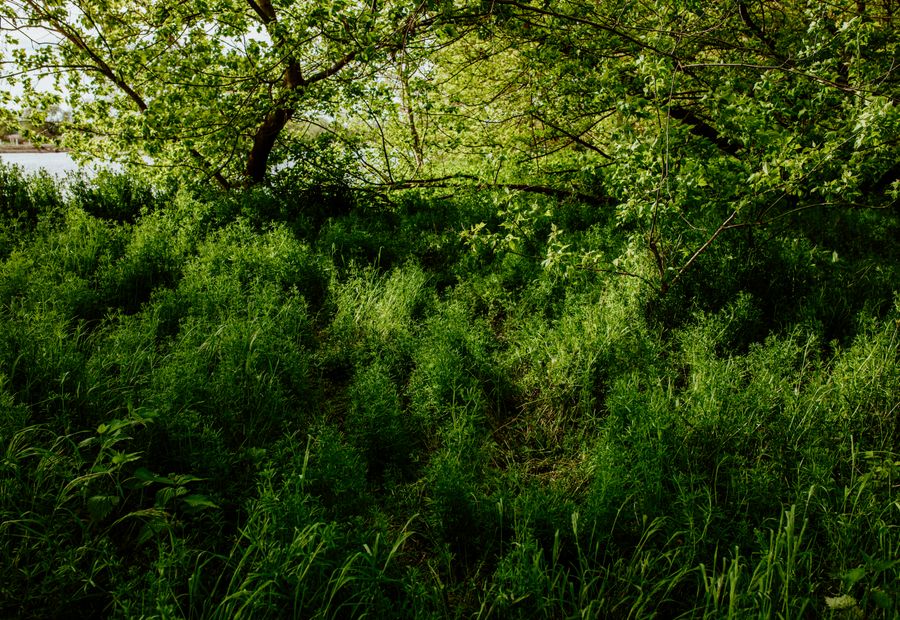
Jonesboro Mulching removes brush, cedar, privet, and volunteer hardwood on farm ground and rural acreage across Craighead, Poinsett, Greene, and Mississippi counties. The standing jobs here are fencerows, ditch banks, turn rows, and field edges on row crop ground, plus understory brush under the hardwoods on Crowley's Ridge. We work Jonesboro, Brookland, Monette, Bay, and the Buffalo Island farms east of town.
Hardwood brush wants a drum head with sharp teeth. We run a Denis Cimaf DAF drum, which this trade respects on oak, hickory, and locust because it holds the stem against the housing and grinds it rather than slapping it. Carbide teeth come off and go back on as they wear. That is the difference between a clean chip and a shredded stub that resprouts faster. The alternative most landowners have already tried is a chain and a blade. A blade drags the fencerow out by the roots and pulls the ditch bank down with it. Then the bank caves the next time the field drains hard, and the farmer pays twice.
Why the Fencerow Filled In
Nothing burns these lines anymore and nothing mows them. Cedar and honey locust are the first colonizers on disturbed ground in Arkansas, and a fence line is disturbed ground that nobody touches. Birds sit on the wire and seed privet under it. Give a line fifteen years and it is a hedge with trees in it, throwing shade across the outside rows and reaching for the equipment.
Thinning Versus Clearing
Clearing takes everything to the dirt. Thinning takes the junk and leaves what you want. Both are the same machine and the same day rate. On the ridge most owners want the second one: privet and cedar gone, beech and sugar maple and tuliptree standing. Tell the operator what stays before he starts and mark it if it is not obvious.
The Maintenance Pass
The chip layer shades out light seed for a season or so. It does not kill a root system, and nobody should sell it that way. The sprouts that come back are small, soft, and cheap to handle. A short pass with the mulcher in year two, or a spot treatment on the stumps that resprout, holds a line for years. Cedar you only pay for once.
Timing
Winter is the right season for brush. Leaves are down, the operator sees the wire and the bank, and dormant wood breaks up faster. We run all year and stop for saturated ground. (870) 555-0152.
Does cedar grow back after it is cut?
No. Eastern red cedar will not sprout from a cut stump. Take it off at the ground and that tree is finished for good. Everything else in a fencerow is less obliging. Privet, blackberry, sumac, honey locust, willow, and sweetgum all push new shoots from the root inside a season. That is why we quote cedar work as a one time job and brush work with a follow up pass in it.
Can you clear brush without killing my shade trees?
Yes, and that is most of what we do on the ridge. The operator works the understory and leaves the canopy standing. He takes the privet and the locust from under a white oak and the oak never feels it. Chains and a blade cannot separate one stem from another. A mulching head can, because the operator picks every stem he touches.
How do you clear a fencerow without wrecking the wire?
We work off the wire, not into it. The head cuts the brush leaning over the fence and along the field side, and the operator keeps the machine back far enough that no stem falls across the top strand. If the fence is coming out anyway, say so at the walk and we clear right through the line, which is faster and cheaper. Old wire buried in a brush pile is the one thing that will stop us cold, so tell us where it is.
What size brush can you take?
Stems up to six or eight inches across go through without slowing down. A fencerow that has been left alone for ten or fifteen years is usually well inside that. Bigger volunteer trees in the line come out one at a time for more money each. Anything over a foot across is timber and we will tell you that instead of grinding it.