Forestry Mulching in Jonesboro, AR
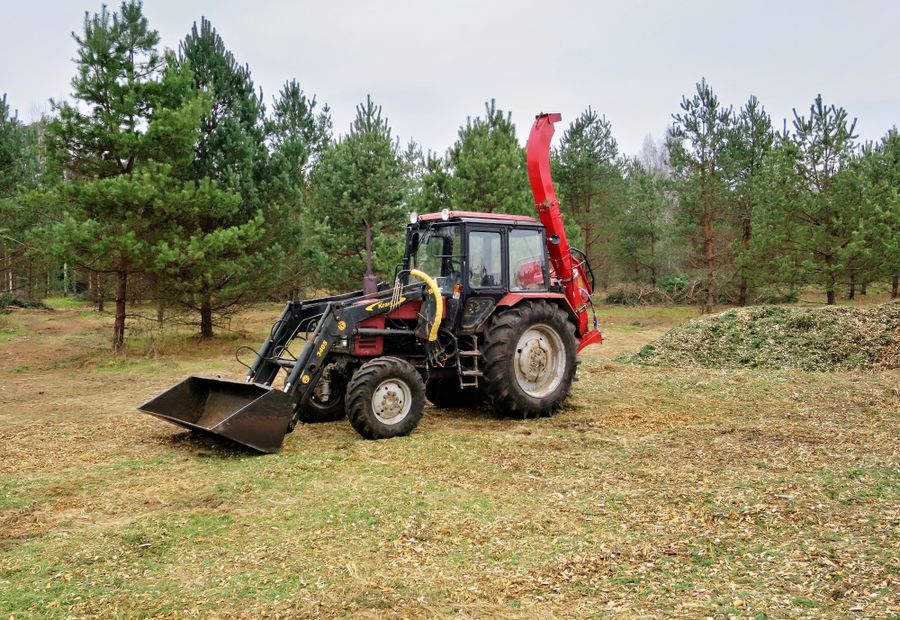
Jonesboro Mulching is a forestry mulching and land clearing contractor doing brush and cedar removal, fencerow and ditch-line clearing, pasture reclamation, lot and site prep, hunting land trails and food plots, bush hogging, and stump grinding on row crop ground, Crowley's Ridge acreage, duck ground, and building sites across Jonesboro, Brookland, Bono, Bay, Lake City, Trumann, Walnut Ridge, Monette, and Caraway. We cover Craighead, Greene, Poinsett, Lawrence, Jackson, and Mississippi counties, Arkansas. This is a forestry outfit, and a tree service is a different trade.
A Fecon Bull Hog drum runs at the front of most of this work. The drum turns rows of carbide teeth, bites from any angle, and holds material against the housing until it comes out as a fine chip. Teeth are a wear part and we rotate them, because dull teeth beat wood instead of cutting it. A disc head is the other tool. It spins blades on a heavy rim, takes bigger stems faster, and leaves a coarser chip. Under the head sits a high flow tracked carrier, a Caterpillar 299D3 XE Land Management or its equal. A full size head runs on hydraulic flow. A standard flow skid steer stalls one in the first honey locust thicket it meets. Rubber tracks spread the weight, so the machine crosses a soft turn row and leaves a print instead of a trench. A dozer works the opposite way. The blade rolls trees over at the root ball and lifts the topsoil with them.
One Machine, One Pass
The stem goes in standing and comes out as chips on the dirt. No felling crew, no dump truck, no burn pile, nothing dragged to the county road. That chip layer breaks the force of rain and holds moisture through a delta August. Nobody is billed for it and every job gets it. The root mat stays put as well. That counts double on Crowley's Ridge, where the loess cap is deep and starts moving the day it goes bare.
What the Machine Takes
Standing stems six to eight inches across are ordinary work. Larger wood comes out one stem at a time and costs more for each one. Past a foot across the material is timber, and timber belongs on a truck with a check attached to it.
Selective Clearing and Regrowth
The operator can take the cedar and leave the white oak standing over it. A blade cannot choose anything. Cedar cut at the ground stays dead, since it will not sprout from a stump. Privet, blackberry, sweetgum, willow, and honey locust all come back from the root. Plan on a maintenance pass in year one or year two.
Pricing and Booking
We price by the acre or by the day, with a minimum that covers the trailer. Winter cuts best, because leaves are off and the operator reads the ground and the property pins. Saturated ground is the real stop, since wet tracks leave marks that stay all season. (870) 555-0152 rings the man who runs the machine.
How much do forestry mulchers charge per hour?
We quote by the acre or by the day. There is a project minimum on top of that, because moving the machine to Caraway costs the same trailer trip whether the job runs half a day or five days. Hourly numbers published online are written by people who have never seen your ground. Four things set a real price here: stem size, how tight the stand is, whether the tract is ridge or bottom, and how far the trailer runs. A grown up turn row prices near the bottom. Timbered ridge acreage prices at the top.
How long does it take to mulch one acre?
Density answers that, not the acre count. Saplings and light brush take a few hours. Mixed brush with stems up to half a foot across takes most of a day. Heavy ridge hardwood with big stems runs past a full day on a single acre. The operator walks your ground first and gives you a number he will stand behind.
How big a tree can a mulcher cut?
Six to eight inches across is routine all day long. The head takes bigger stems one at a time, slower, and each one costs more. Once the wood passes about a foot across it is timber. Timber goes on a log truck and pays you. Grinding it up burns money and teeth.
Do you need a permit for forestry mulching?
Clearing brush on your own acreage in Arkansas generally needs no state permit. Burning the pile is the part that draws rules, and Craighead County has shut burning down outright in dry, windy weeks. Mulching leaves no pile, so the question never comes up. Clearing and grading an acre or more for a construction project is different and falls under the state stormwater rules, which your builder carries in his plan. Call your county before anyone strikes a match.