Pasture Reclamation & Fence Line Clearing in Jonesboro, AR
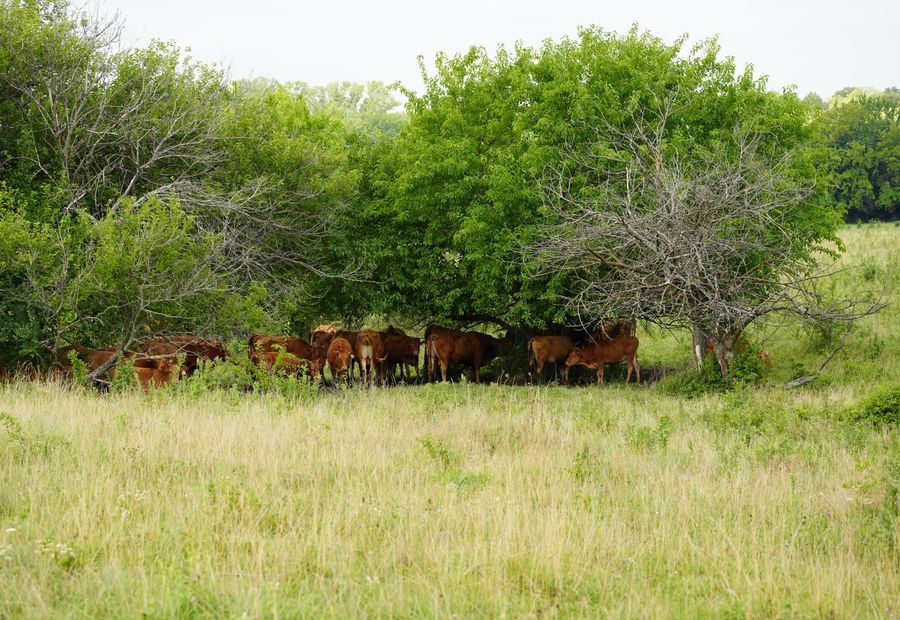
Jonesboro Mulching reclaims grazing ground and clears fence lines, ditch banks, and field edges across Craighead, Poinsett, Lawrence, and Jackson counties. Around Jonesboro the cattle acreage sits between the row crop, so most of this work is line work: fencerows grown shut, water gaps, gate approaches, pond edges, and the brush strip between a pasture and a bean field. We serve Bono, Brookland, Walnut Ridge, Bay, and the farms along the St. Francis.
Soft ground decides the machine on this work. An ASV Posi-Track RT undercarriage puts a fraction of a tire's pressure on the dirt, which is how a mulcher crosses a wet water gap approach and leaves a print where a wheeled tractor digs a trench. The head is a Loftness Battle Ax drum, which leaves the finest chip of any drum we run. That matters in a pasture, because a fine chip settles into the sod instead of lying in a mat that smothers grass. The other route landowners consider is a blade down the fence line. A blade pulls posts, roots, and bank soil into one windrow, and then somebody burns it or hauls it. The windrow sits at the edge of the field for a year and the ditch bank it came off keeps sliding.
Working Around Existing Wire
Most fence lines we clear still have good wire in them. The operator works from the field side, cuts the leaners before they can fall on the top strand, and grinds the brush standing in the line. Buried wire, old rolls, and hidden T-posts are the one hazard that stops the machine, so walk the line with us and point them out.
Gates, Water, and Paddocks
Cattle wear a path and brush fills in behind them. We open gate approaches so a truck and trailer can swing, clear pond edges back far enough that stock can drink without fighting a thicket, and cut paddock division lines for rotational grazing before the fence goes up. On a water gap the machine works the approach and stays out of the running channel.
Seeding After
Reclaimed ground grows what you plant in it. Broadcast into a light chip layer in late winter and the seed does fine. A heavy layer needs a second pass with the head to break it down first. We book year round and hold off when the ground is saturated. (870) 555-0152.
Can you clear a fence line before my fence crew builds?
That is one of the jobs we do most. The crew wants a clean strip wide enough for the tractor, the post driver, and the wire, with nothing overhead to fight. We cut that strip to the dirt and leave chips on it, which keeps mud down while the crew works. Give us the corners and the width and we will match them.
How wide should a cleared fence line be?
Wide enough that the wire never touches wood and the mower can get down both sides later. Most owners here take a strip a machine width across, and some take two on a line that had trees leaning over it. A narrow cut looks tidy the first year and fills back in by the third.
Do the wood chips hurt grass or cattle?
No. The chips lie on the surface, break rain impact, and rot down into the soil. Grass comes up through them fine, and a heavy layer thins out over a season. Cattle walk on them without trouble. If you plan to seed, we can run the head a second time to knock the layer finer so the seed reaches dirt.
Will the brush come back in my pasture?
Some of it will. Cedar cut at the ground is done and stays done. Blackberry, locust, willow, and privet sprout back from the root, and an open pasture with stock on it slows them down but does not stop them. A rotary cutter pass each year after the reclaim is what holds the ground. That is cheap work compared to reclaiming it twice.