Land Clearing in Jonesboro, AR
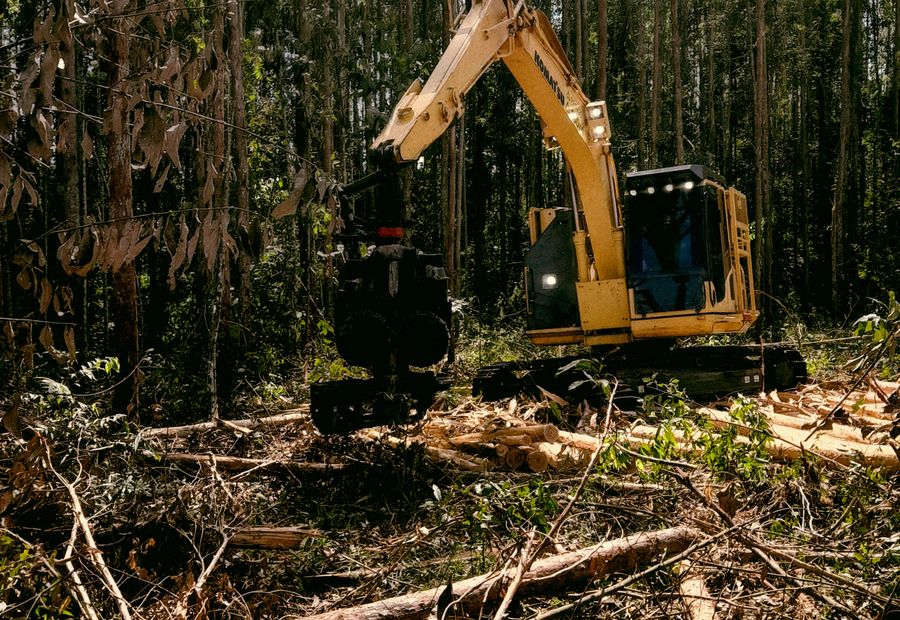
Jonesboro Mulching is a land clearing contractor working row crop ground, Crowley's Ridge acreage, hunting tracts, and building lots across Craighead, Greene, Poinsett, Lawrence, Jackson, and Mississippi counties. We clear overgrown fields and field edges, fencerows and ditch banks, driveway corridors, building sites, timbered ridge acreage, and bottomland brush near Trumann, Lake City, Bay, and Caraway. Forestry mulching is our main method. It is not the only one, and the end use of the ground picks the machine.
Three tools clear land and they do different things. A mulching head grinds standing wood in place. We run FAE heads on a high flow tracked carrier, and the FAE PT line builds dedicated tracked machines for the same job. A dozer blade shears at the root ball and carries the topsoil off with the brush. On the ridge that topsoil is windblown loess, and loess moves off a bare slope in one hard rain. An excavator with a thumb pulls stumps and root balls out whole, which is what a graded pad actually needs. Every root ball a blade or a bucket lifts leaves a crater. Somebody backfills it, somebody packs it, and it settles anyway for two or three years. That work never shows on the clearing quote.
Picking the Method by End Use
Pasture, trails, food plots, fence lines, and view work go to the mulcher. Ground that will carry a slab, a shop, or engineered fill goes to grubbing with an excavator. Deep brush with a pad at the end takes both. We mulch the tract first so the crew can see the dirt, then the excavator comes in and pulls only the root zone under the footprint. Phasing it that way keeps the pad money on the pad instead of spending it on ten acres of open field.
Grade, Drainage, and What Comes After
Cleared ground has to shed water. On flat delta tracts that means the surface drains toward the ditch and the turn row, not into a low spot at the tree line. On the ridge it means the slope keeps cover on it through the first storm. Mulched ground already has that cover, since the chips lie where the brush stood. Scraped ground does not, and scraped ground on a grade needs silt fence and seed before the weather tests it.
Limits and Scheduling
Rock, big timber, and stumps below grade are not mulching work, and we say so at the walk. Wet ground moves a start date, because a saturated field takes track damage that lasts a full season. We book year round and cut best in winter. (870) 555-0152.
How much does it cost to clear an acre of heavily wooded land?
Heavy wooded acreage in northeast Arkansas generally runs between fifteen hundred and thirty five hundred dollars an acre, and our project minimum sits around twenty five hundred. Stem count and stem size push it around more than anything else. Slope on the ridge, standing water in a bottom, a tight gate the trailer cannot reach, and any grading that follows all add to it. We give you the number after we walk it, not before.
What is the difference between land clearing and forestry mulching?
Land clearing is what you want done. Forestry mulching is one way of doing it. A dozer or an excavator clears by moving soil and roots, which leaves you a pile and a field of holes. A mulcher grinds the standing material in place and leaves chips. When the plan calls for a shop pad with the root zone taken out, the dozer and the excavator are correct. For everything else on rural acreage the mulcher costs less and leaves better ground.
What is grubbing and do I need it?
Grubbing means pulling the root zone out of the ground. A house pad, a shop pad, and engineered fill compacted in lifts all call for it. Pasture, trails, food plots, fencerows, and hunting ground do not. Mulching does not grub. If an engineer or a builder wrote a spec for your project, read it first, because that spec decides the machine.
Do I have to burn or haul off the debris?
Not with mulching. There is no pile to burn and no load to haul, so no burn permit and no dump fee enter the picture. That matters here, because the county issues burn bans in dry windy stretches and a ban stops a fire outright. If a dozer clears your tract instead, the debris pile and the trucking are real line items on the bill.